
today revealed the "Vision Pro" headset, its first mixed-reality headset device, and visionOS, an all new operating system for the device.
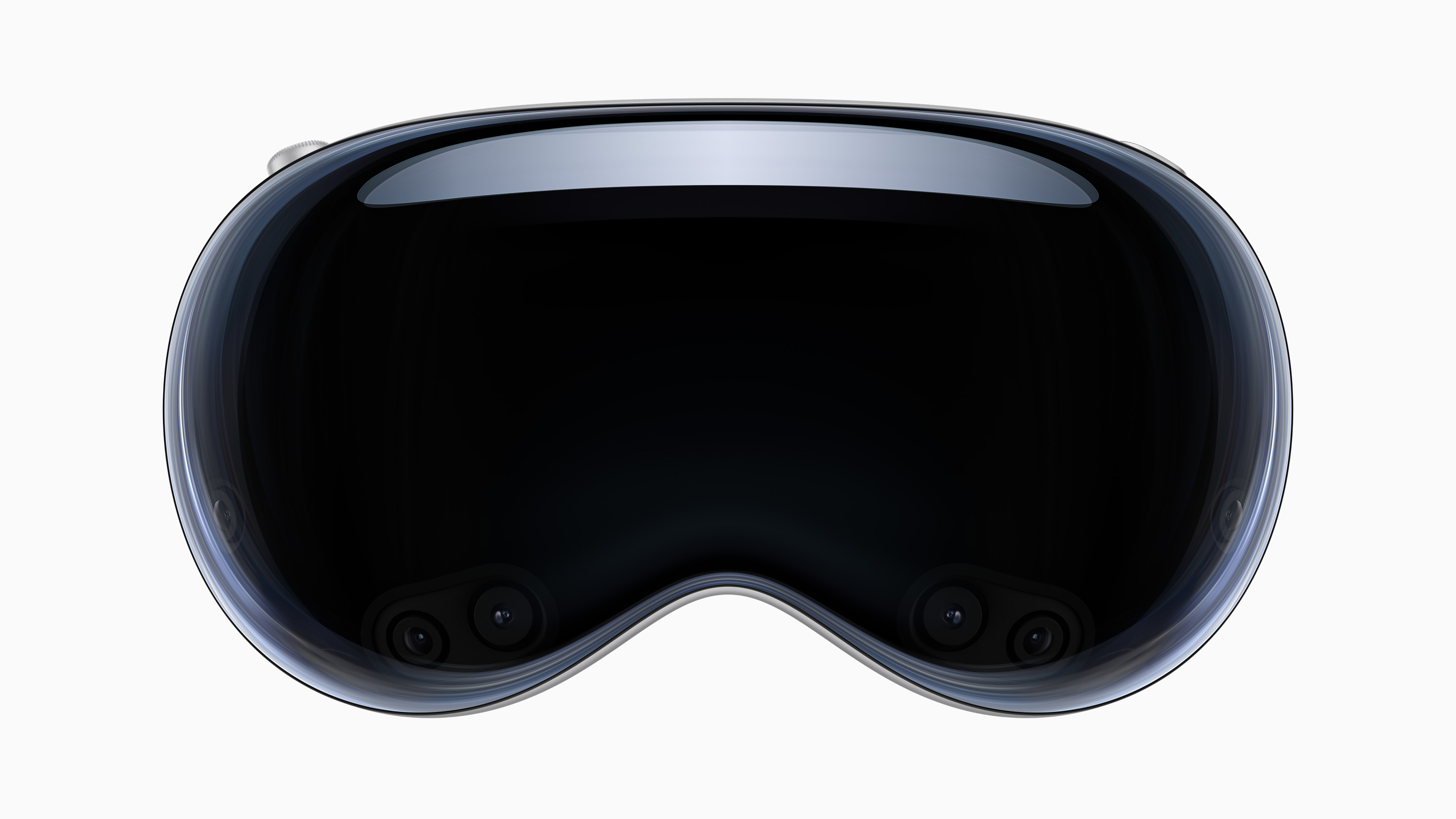


Vision Pro is Apple's first mixed-reality device, showing passthrough video of a wearer's eyes. The device features an all-new operating system that features a three dimensional interface. Experiences in Vision Pro aren't constrained to the boundaries of a display, users can make apps any scale, and place apps wherever they wish. Environments extend beyond your physical space, and control how immersed you are by turning the digital crown. Apple says that it marks the beginning of "spatial computing."

A Home view floats in the world in front of you to feel "truly present" in your room. Users use a combination of their eyes, hands, and voice to control the device. It uses eye tracking, and finger tapping and flicking to scroll or select.

The headset features passthrough video of a wearer's eyes in a feature that Apple calls "EyeSight," showing different feedback to surrounding people about what you are viewing inside the headset. It uses a lenticular OLED display to show the correct perspective to anyone viewing the wearer.

Vision Pro also allows users to connect to their Mac and expand its display in a virtual space, including alongside apps running on Vision Pro itself.

FaceTime on Vision Pro can display life-sized individuals over video calls. There is an optimized experience for viewing photos and videos. Vision Pro is also "Apple's first 3D camera," showing depth in video with Spatial Audio. The headset features a cinematic video viewing experience to scale the screen beyond the dimensions of your room. Users can create a Digital Persona to use during video calls.

Disney promoted themed experiences for sports, Star Wars, Marvel, National Geographic, and more with Apple's Reality Pro headset. Disney+ will be available for the headset upon the device's launch.

The entire front of the headset is made of polished glass that flows into a lightweight aluminum frame. The top of the headset features a button and a Digital Crown. It has a modular system to achieve an optimal fit. The sides of the headset feature audiopods. Those who wear glasses must use magnetic prescription glass inserts. The headset's battery is separate and links via a magnetic connection to the side of the headset.

The headset features a microOLED Apple silicon backplane and has 23 million pixels across two display panels. 4K video can be rendered at full resolution.

Vision Pro features a new Spatial Audio system provides ambient sound. It can match the sound to an environment using audio ray-tracing.

The headset contains the M2 chip paired with a new "R1" chip, dedicated toward real-time sensor processing.

iPhone and iPad apps can run in visionOS to provide a large number of apps upon the device's launch. It will feature a brand new App Store to discover apps built for visionOS as well as compatible ‌iPhone‌ and ‌iPad‌ apps.

Optic ID uses a wearer's iris to authenticate users and unlock the Vision Pro headset.

Apple's Vision Pro starts at $3,499 and it will be available early next year. It will be available in Apple retail stores in the U.S. only.

More to follow...
Related Roundup: AR/VR Headset
Tag: WWDC
Related Forums: Apple Glasses, AR and VR, Apple, Inc and Tech Industry

This article, "Apple Reveals 'Vision Pro' Headset and visionOS" first appeared on MacRumors.com

Discuss this article in our forums

today revealed the "Vision Pro" headset, its first mixed-reality headset device, and visionOS, an all new operating system for the device.


Vision Pro is Apple's first mixed-reality device, showing passthrough video of a wearer's eyes. The device features an all-new operating system that features a three dimensional interface. Experiences in Vision Pro aren't constrained to the boundaries of a display, users can make apps any scale, and place apps wherever they wish. Environments extend beyond your physical space, and control how immersed you are by turning the digital crown. Apple says that it marks the beginning of "spatial computing."

A Home view floats in the world in front of you to feel "truly present" in your room. Users use a combination of their eyes, hands, and voice to control the device. It uses eye tracking, and finger tapping and flicking to scroll or select.

The headset features passthrough video of a wearer's eyes in a feature that Apple calls "EyeSight," showing different feedback to surrounding people about what you are viewing inside the headset. It uses a lenticular OLED display to show the correct perspective to anyone viewing the wearer.

Vision Pro also allows users to connect to their Mac and expand its display in a virtual space, including alongside apps running on Vision Pro itself.

FaceTime on Vision Pro can display life-sized individuals over video calls. There is an optimized experience for viewing photos and videos. Vision Pro is also "Apple's first 3D camera," showing depth in video with Spatial Audio. The headset features a cinematic video viewing experience to scale the screen beyond the dimensions of your room. Users can create a Digital Persona to use during video calls.

Disney promoted themed experiences for sports, Star Wars, Marvel, National Geographic, and more with Apple's Reality Pro headset. Disney+ will be available for the headset upon the device's launch.

The entire front of the headset is made of polished glass that flows into a lightweight aluminum frame. The top of the headset features a button and a Digital Crown. It has a modular system to achieve an optimal fit. The sides of the headset feature audiopods. Those who wear glasses must use magnetic prescription glass inserts. The headset's battery is separate and links via a magnetic connection to the side of the headset.

The headset features a microOLED Apple silicon backplane and has 23 million pixels across two display panels. 4K video can be rendered at full resolution.

Vision Pro features a new Spatial Audio system provides ambient sound. It can match the sound to an environment using audio ray-tracing.

The headset contains the M2 chip paired with a new "R1" chip, dedicated toward real-time sensor processing.

iPhone and iPad apps can run in visionOS to provide a large number of apps upon the device's launch. It will feature a brand new App Store to discover apps built for visionOS as well as compatible ‌iPhone‌ and ‌iPad‌ apps.

Optic ID uses a wearer's iris to authenticate users and unlock the Vision Pro headset.

Apple's Vision Pro starts at $3,499 and it will be available early next year. It will be available in Apple retail stores in the U.S. only.

More to follow...
Related Roundup: AR/VR Headset
Tag: WWDC
Related Forums: Apple Glasses, AR and VR, Apple, Inc and Tech Industry

This article, "Apple Reveals 'Vision Pro' Headset and visionOS" first appeared on MacRumors.com

Discuss this article in our forums

today revealed the "Vision Pro" headset, its first mixed-reality headset device, and visionOS, an all new operating system for the device.


Vision Pro is Apple's first mixed-reality device, showing passthrough video of a wearer's eyes. The device features an all-new operating system that features a three dimensional interface. Experiences in Vision Pro aren't constrained to the boundaries of a display, users can make apps any scale, and place apps wherever they wish. Environments extend beyond your physical space, and control how immersed you are by turning the digital crown. Apple says that it marks the beginning of "spatial computing."

A Home view floats in the world in front of you to feel "truly present" in your room. Users use a combination of their eyes, hands, and voice to control the device. It uses eye tracking, and finger tapping and flicking to scroll or select.

The headset features passthrough video of a wearer's eyes in a feature that Apple calls "EyeSight," showing different feedback to surrounding people about what you are viewing inside the headset. It uses a lenticular OLED display to show the correct perspective to anyone viewing the wearer.

Vision Pro also allows users to connect to their Mac and expand its display in a virtual space, including alongside apps running on Vision Pro itself.

FaceTime on Vision Pro can display life-sized individuals over video calls. There is an optimized experience for viewing photos and videos. Vision Pro is also "Apple's first 3D camera," showing depth in video with Spatial Audio. The headset features a cinematic video viewing experience to scale the screen beyond the dimensions of your room. Users can create a Digital Persona to use during video calls.

Disney promoted themed experiences for sports, Star Wars, Marvel, National Geographic, and more with Apple's Reality Pro headset. Disney+ will be available for the headset upon the device's launch.

The entire front of the headset is made of polished glass that flows into a lightweight aluminum frame. The top of the headset features a button and a Digital Crown. It has a modular system to achieve an optimal fit. The sides of the headset feature audiopods. Those who wear glasses must use magnetic prescription glass inserts. The headset's battery is separate and links via a magnetic connection to the side of the headset.

The headset features a microOLED Apple silicon backplane and has 23 million pixels across two display panels. 4K video can be rendered at full resolution.

Vision Pro features a new Spatial Audio system provides ambient sound. It can match the sound to an environment using audio ray-tracing.

The headset contains the M2 chip paired with a new "R1" chip, dedicated toward real-time sensor processing.

iPhone and iPad apps can run in visionOS to provide a large number of apps upon the device's launch. It will feature a brand new App Store to discover apps built for visionOS as well as compatible ‌iPhone‌ and ‌iPad‌ apps.

Optic ID uses a wearer's iris to authenticate users and unlock the Vision Pro headset.

Apple's Vision Pro starts at $3,499 and it will be available early next year. It will be available in Apple retail stores in the U.S. only.

More to follow...
Related Roundup: AR/VR Headset
Tag: WWDC

This article, "Apple Reveals 'Vision Pro' Headset and visionOS" first appeared on MacRumors.com

Discuss this article in our forums
today revealed the "Vision Pro" headset, its first mixed-reality headset device, and visionOS, an all new operating system for the device.


Vision Pro is Apple's first mixed-reality device, showing passthrough video of a wearer's eyes. The device features an all-new operating system that features a three dimensional interface. Experiences in Vision Pro aren't constrained to the boundaries of a display, users can make apps any scale, and place apps wherever they wish. Environments extend beyond your physical space, and control how immersed you are by turning the digital crown. Apple says that it marks the beginning of "spatial computing."

A Home view floats in the world in front of you to feel "truly present" in your room. Users use a combination of their eyes, hands, and voice to control the device. It uses eye tracking, and finger tapping and flicking to scroll or select.

The headset features passthrough video of a wearer's eyes in a feature that Apple calls "EyeSight," showing different feedback to surrounding people about what you are viewing inside the headset. It uses a lenticular OLED display to show the correct perspective to anyone viewing the wearer.

Vision Pro also allows users to connect to their Mac and expand its display in a virtual space, including alongside apps running on Vision Pro itself.

FaceTime on Vision Pro can display life-sized individuals over video calls. There is an optimized experience for viewing photos and videos. Vision Pro is also "Apple's first 3D camera," showing depth in video with Spatial Audio. The headset features a cinematic video viewing experience to scale the screen beyond the dimensions of your room. Users can create a Digital Persona to use during video calls.

Disney promoted themed experiences for sports, Star Wars, Marvel, National Geographic, and more with Apple's Reality Pro headset. Disney+ will be available for the headset upon the device's launch.

The entire front of the headset is made of polished glass that flows into a lightweight aluminum frame. The top of the headset features a button and a Digital Crown. It has a modular system to achieve an optimal fit. The sides of the headset feature audiopods. Those who wear glasses must use magnetic prescription glass inserts. The headset's battery is separate and links via a magnetic connection to the side of the headset.

The headset features a microOLED Apple silicon backplane and has 23 million pixels across two display panels. 4K video can be rendered at full resolution.

Vision Pro features a new Spatial Audio system provides ambient sound. It can match the sound to an environment using audio ray-tracing.

The headset contains the M2 chip paired with a new "R1" chip, dedicated toward real-time sensor processing.

iPhone and iPad apps can run in visionOS to provide a large number of apps upon the device's launch. It will feature a brand new App Store to discover apps built for visionOS as well as compatible ‌iPhone‌ and ‌iPad‌ apps.

Optic ID uses a wearer's iris to authenticate users and unlock the Vision Pro headset.

Apple's Vision Pro starts at $3,499 and it will be available early next year. It will be available in Apple retail stores in the U.S. only.

More to follow...
Related Roundup: AR/VR Headset
Tag: WWDC

This article, "Apple Reveals 'Vision Pro' Headset and visionOS" first appeared on MacRumors.com

Discuss this article in our forums
Apple today revealed the "Vision Pro" headset, its first mixed-reality headset device, and visionOS, an all new operating system for the device. Vision Pro is Apple's first mixed-reality device, showing

Apple today revealed the “Vision Pro” headset, its first mixed-reality headset device, and visionOS, an all new operating system for the device.

Vision Pro is Apple’s first mixed-reality device, showing passthrough video of a wearer’s eyes. The device features an all-new operating system that features a three dimensional interface. Experiences in Vision Pro aren’t constrained to the boundaries of a display, users can make apps any scale, and place apps wherever they wish. Environments extend beyond your physical space, and control how immersed you are by turning the digital crown. Apple says that it marks the beginning of “spatial computing.”

A Home view floats in the world in front of you to feel “truly present” in your room. Users use a combination of their eyes, hands, and voice to control the device. It uses eye tracking, and finger tapping and flicking to scroll or select.

The headset features passthrough video of a wearer’s eyes in a feature that Apple calls “EyeSight,” showing different feedback to surrounding people about what you are viewing inside the headset. It uses a lenticular OLED display to show the correct perspective to anyone viewing the wearer.

Vision Pro also allows users to connect to their Mac and expand its display in a virtual space, including alongside apps running on Vision Pro itself.

FaceTime on Vision Pro can display life-sized individuals over video calls. There is an optimized experience for viewing photos and videos. Vision Pro is also “Apple’s first 3D camera,” showing depth in video with Spatial Audio. The headset features a cinematic video viewing experience to scale the screen beyond the dimensions of your room. Users can create a Digital Persona to use during video calls.

Disney promoted themed experiences for sports, Star Wars, Marvel, National Geographic, and more with Apple’s Reality Pro headset. Disney+ will be available for the headset upon the device’s launch.

The entire front of the headset is made of polished glass that flows into a lightweight aluminum frame. The top of the headset features a button and a Digital Crown. It has a modular system to achieve an optimal fit. The sides of the headset feature audiopods. Those who wear glasses must use magnetic prescription glass inserts. The headset’s battery is separate and links via a magnetic connection to the side of the headset.

The headset features a microOLED Apple silicon backplane and has 23 million pixels across two display panels. 4K video can be rendered at full resolution.

Vision Pro features a new Spatial Audio system provides ambient sound. It can match the sound to an environment using audio ray-tracing.

The headset contains the M2 chip paired with a new “R1” chip, dedicated toward real-time sensor processing.

iPhone and iPad apps can run in visionOS to provide a large number of apps upon the device’s launch. It will feature a brand new App Store to discover apps built for visionOS as well as compatible ‌iPhone‌ and ‌iPad‌ apps.

Optic ID uses a wearer’s iris to authenticate users and unlock the Vision Pro headset.

Apple’s Vision Pro starts at $3,499 and it will be available early next year. It will be available in Apple retail stores in the U.S. only.

More to follow…

Related Roundup: AR/VR Headset
Tag: WWDC

This article, "Apple Reveals 'Vision Pro' Headset and visionOS" first appeared on MacRumors.com

Discuss this article in our forums


You may also be interested in this

Apple’s software updates …

The AirPods lineup gains new and improved features that transform the personal audio experience. This fall, software updates across AirPods will unlock powerful new capabilities to transform the personal audio

Best Apple Deals of the W…

It's 2026, and we're kicking off the New Year with all of the best Apple-related discounts you can find online this week. Many of these are matching the low prices

Apple shares App Store Tr…

Apple has released a transparency report for the App Store that provides information on requests made by government entities and private parties for data, app removals, or account preservation.Apple releases

U.S. FCC opens 6 GHz band…

The Federal Communications Commission (FCC) on Thursday agreed to open the 6 GHz band to high-speed peer-to-peer Wi-Fi communication. Apple and others cheered the move. ` Lauren Feiner for CNBC:

Popular Adventure Game &#…

Adventure game "Stray," which is designed to let players take on the role of a daring orange cat, is available for download on the Mac as of today. Though the

Mac Studio updated with “…

The Mac Studio just got its first update, and it’s a screamer. The desktop machine now comes with Apple’s new M2 Ultra chip — the “most powerful chip ever created

Best Apple Deals of the W…

This week saw discounts remain consistent for multiple Apple products, including record low prices on the M4 MacBook Air, M4 MacBook Pro, and M3 iPad Air. We're also tracking solid

Apple Sports app brings s…

Apple Sports 2.0 adds support for Live Activities so real-time game updates appear on the iPhone and Apple Watch Lock Screens. (via Cult of Mac - Apple news, rumors, reviews
X

A whimsical homage to the days in black and white, celebrating the magic of Mac OS. Dress up your blog with retro, chunky-grade pixellated graphics to evoke some serious computer nostalgia. Supports a custom menu, custom header image, custom background, two footer widget areas, and a full-width page template. I updated Stuart Brown's 2011 masterpiece to meet the needs of the times, made it responsive , got dark mode, custom search widget and more.You can download it from tigaman.com, where you can also find more useful code snippets and plugins to get even more out of wordpress.